
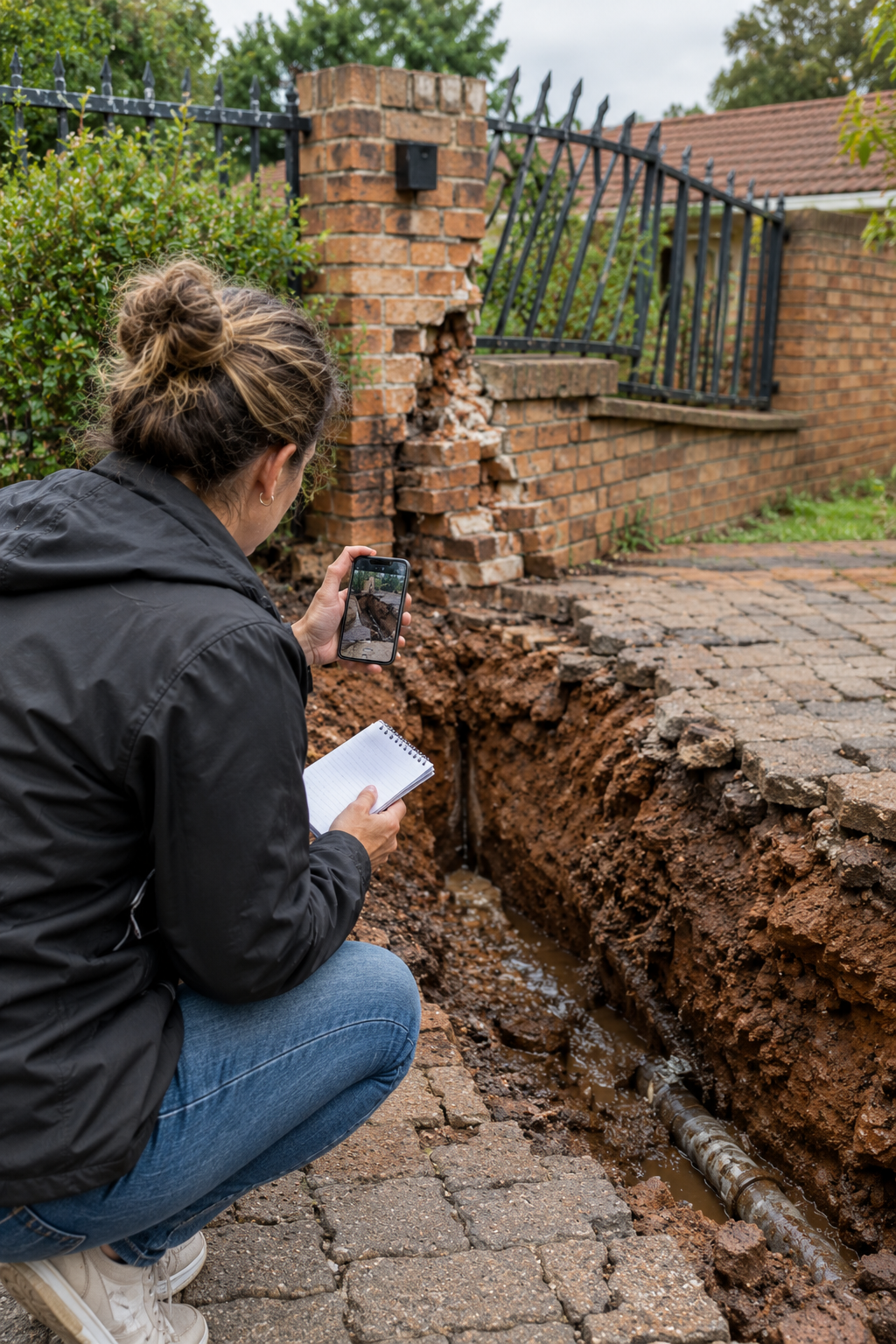
You wake to a trench across your driveway. The council came to fix a pipe. Weeks later the hole stays open. Nobody has returned. Your lawn is ruined. Rainwater pools in the gap. It is also a safety risk.
Many Gauteng homeowners know this feeling. Can the council enter your property at will? What if the work damages your home? What if it drags on for months? The law gives you real rights here. This article sets them out plainly.
What a municipal servitude actually is
Property rights in South Africa live in writing. You hold no land right unless recorded. A servitude is a limited real right. It lets a third party use your property. In the municipal context it allows access. The council reaches its pipes, cables and services.
A servitude does not transfer ownership. You remain the owner throughout. The council holds only a limited right. That servitude shows on your title deed. It also appears on the Surveyor General diagram.
Know where your property begins and ends
First establish your true boundaries. A wall or fence can mislead you. Many owners assume the land to the road is theirs. That assumption is often wrong.
Your registered boundary sits in the SG diagram. SG stands for Surveyor General. It shows cadastral boundary lines as coordinates. It also flags any registered servitude. This record is public. Anyone may request it. Do not rely on building plans alone. Check the title deed and SG diagram.

Can the council enter without warning?
A servitude can give a right of access. That right still has limits. Access exists for administrative functions only. Think maintenance of pipes and cables. The circumstances always matter.
A genuine emergency can justify urgent entry. A burst water main is urgent. A serious sewer failure is urgent. Routine maintenance is different. Without an emergency, conduct must be reasonable. You cannot refuse a valid right of access. You can still arrange a suitable time. Suggest a proper appointment where nothing is urgent. Context decides almost every one of these questions.
Be wary of people claiming to be officials
Stay alert to impersonators. Nearby infrastructure does not grant anyone entry. Not everyone claiming council authority is genuine. Verify identity before allowing access. Contact the municipality directly if unsure. Your safety comes first.
When municipal work damages your property
Now the common frustration. Workers dig up a driveway or garden. They replace a pipe below. The job itself finishes quickly. Then the excavation stays open. Restoration never happens.
Several problems follow. An open trench is a safety risk. Damage to walls or fencing lowers value. Broken security fencing endangers the occupants. The council may hold a genuine right to dig. That right sits alongside yours. Leaving a hole open for months is not reasonable.
Can you just repair it yourself?
It is tempting to fill the hole yourself. Caution is needed here. The work touches municipal infrastructure. Technical and safety issues apply. Legal issues apply too. Procurement rules govern who may do the work. Council service providers must be appointed lawfully.
Fixing it yourself and claiming later is risky. That approach can bypass the tender process. You cannot hijack that system. Place the council on formal notice instead.
What if the council says it has no money or staff?
The council may plead a lack of funds. It may plead a lack of staff. That does not end the matter. Your first step is a written demand. Address it to the city council. Identify the problem clearly. State the action you require. Set out the consequences of inaction.
Ignoring a legal duty invites court action. This can include an application for a mandamus. A mandamus is an order compelling action. The council must comply or justify its failure.
Why formal legal steps matter
Frustration with delay is understandable. Phone calls rarely fix these problems. A written demand creates a formal record. It puts the council on notice. Documentation matters if litigation follows. Keep copies of the following:
- Correspondence with the council
- Photographs and videos of the damage
- Dates the work took place
- Details of officials or contractors involved
- Quotations for damage or restoration
- Past complaints and reference numbers
This evidence shows what happened and when.
When a court order already exists
Sometimes an order already exists. The council still does nothing. A court order is not a suggestion. Ignoring it can amount to contempt of court. Contempt is not about being above the law. It targets anyone defying a valid order. That includes the municipality itself. Contempt proceedings can force compliance.
Can homeowners act together?
One street often shares the same problem. Affected owners can coordinate their complaints. A group can show systemic failure. That picture can carry more weight. Get legal advice before acting together. The right mechanism depends on the facts.

Municipal means and section 154 of the Constitution
Municipalities carry constitutional and statutory duties. They also face real financial limits. The Constitution offers a useful lens. Section 154 asks a practical question. Is the work within the council's means? Consider both financial and administrative means.
Within both, you can compel them directly. Within financial but not administrative means, a tender must follow. Within neither, the picture is graver. The public should then be informed. The council may be failing its mandate. That failure can lead to administration.
Knowing your rights, step by step
Start by understanding your legal position. Work through these steps:
- Check your registered boundaries.
- Confirm whether a servitude exists.
- Establish why the council needs access.
- Decide if the work is urgent or routine.
- Document any damage carefully.
- Communicate with the council in writing.
- Keep every response and reference number.
- Seek legal advice if the dispute escalates.
The law balances municipal duties and your rights. Understanding that balance protects your property.
Frequently asked questions
What is a municipal servitude?
It is a limited right of access over your property. The council uses it to maintain infrastructure. It does not transfer ownership of your land.
Where do I find my property boundary?
Your boundary sits in the SG diagram. SG means Surveyor General. It shows cadastral boundary lines as coordinates. This record is public.
Can the municipality enter without warning?
It depends on urgency. A genuine emergency can justify immediate access. Routine work should be reasonable and not excessive.
The council left an open trench for months. What can I do?
Start with a written letter of demand. Escalate to a mandamus if it is ignored. Use contempt where a court order already exists.
Can I fix the hole myself and claim the cost?
This is risky. It can bypass the required tender process. Council contractors must be appointed lawfully. Seek advice before acting.
Can affected neighbours act together?
Yes, in many cases. Shared complaints can show a systemic failure. Get legal advice on the right approach.
What is section 154 of the Constitution?
It concerns a council's financial and administrative means. It helps decide whether they can be compelled. It can also lead to administration.